

Have you ever had a moment where your body reacted before you had time to think?
Maybe your heart started racing for no obvious reason.
Maybe your shoulders tightened during a simple conversation.
Or maybe everything inside you suddenly went quiet and flat, like the volume of life had been turned down.
That’s your nervous system at work.
It’s constantly scanning your environment, taking in cues and asking one simple question:
Am I safe right now?
Based on that, it responds instantly, often long before you’re consciously aware of what’s happening.
For a long time, we thought this response had only two settings: fight or flight, or rest and digest. But newer perspectives suggest the story is more nuanced.
Polyvagal Theory offers a helpful way of understanding how the nervous system may organise its responses to safety and threat. While this model is still being explored and debated within science, it provides a useful framework for making sense of how we experience stress, connection and recovery.
It highlights a third pattern that often gets overlooked: a shutdown or freeze response. It also introduces what’s often called the Social Engagement System, the state where we feel connected, grounded and better able to recover.
Understanding these patterns can be an important part of the healing process we support through chiropractic care. After all, your body is generally better able to focus on repair when it experiences a sense of safety.
You might assume your sciatic nerves are the longest in your body, and in one sense, they are. They’re the thickest and longest single-strand nerves, running from your lower back to your toes.
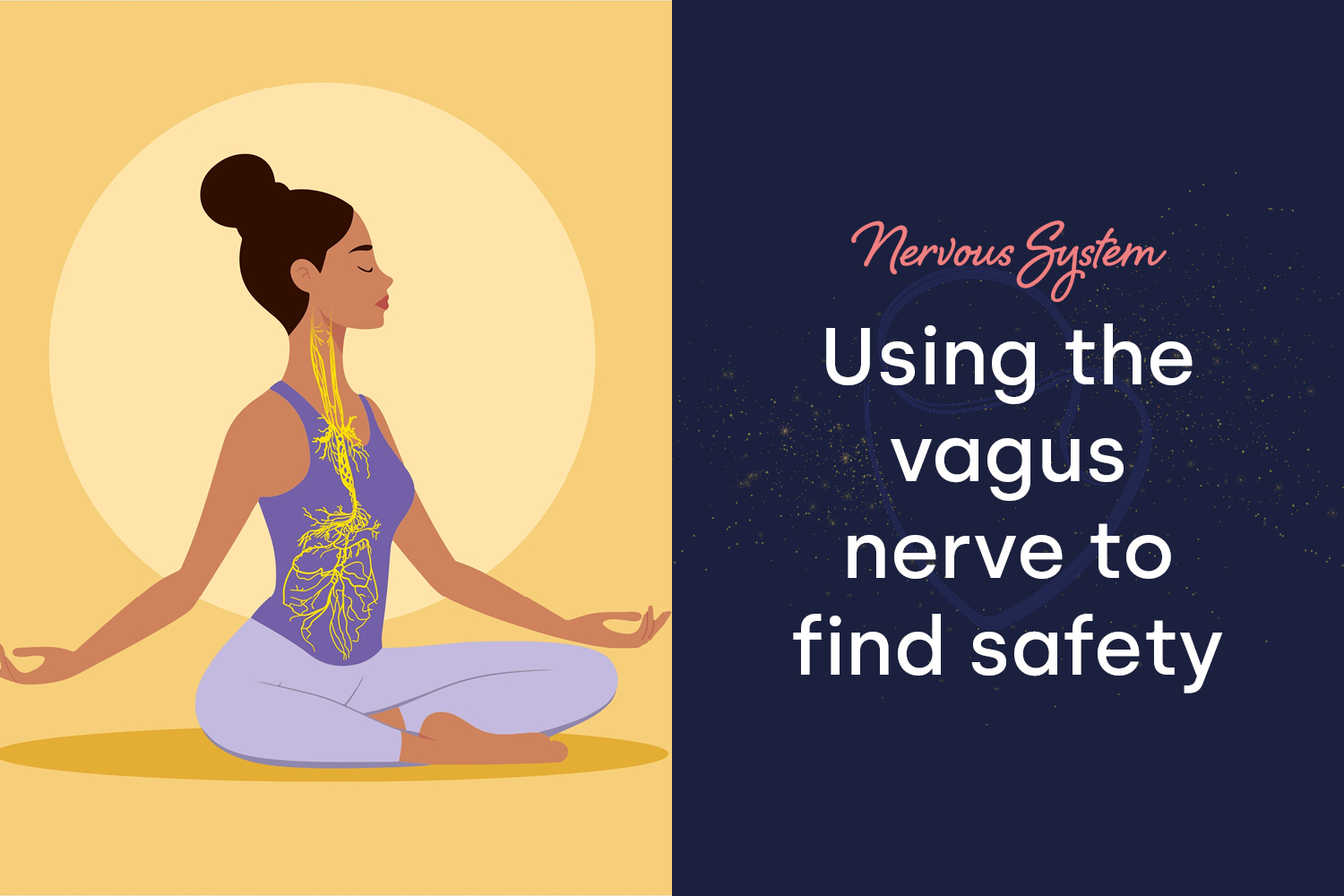
The vagus nerve, however, has the widest reach. Its name means “wanderer” in Latin because it travels from the brainstem down into the heart, lungs and digestive organs.
Where the sciatic nerves are primarily involved in movement and sensation in your legs, the vagus nerve plays an important role in regulating many internal processes, particularly those linked to rest, recovery and connection.
Polyvagal Theory is often described using the metaphor of a ladder with three main patterns of response. Where you find yourself on this ladder reflects how your nervous system as a whole is interpreting safety in the moment.
At the top is the Social Engagement System. This is where you feel more like yourself, calm, present, able to connect with others and think clearly.
In the middle sits Fight or Flight. You might recognise this as feeling wired, tense, or constantly “on.” Your body is mobilised and ready to deal with challenges, but it’s not a comfortable place to stay.
At the bottom is the Freeze Response. This can feel like heaviness, disconnection or shutdown, as if your system has pulled the handbrake when things feel too overwhelming.
In reality, these states aren’t fixed steps. They can overlap and shift fluidly depending on your environment, your experiences and what your body perceives in the moment.
You’ve probably felt this before, a moment where your system shifts into survival mode and everything inside you changes.
But this doesn’t just happen in extreme situations.
It can look like sitting at your desk, overwhelmed but unable to focus.
Or lying awake at night, exhausted but unable to switch off.
Or moving through your day feeling flat, disconnected, or not quite yourself – even when life looks “fine” on the outside.
These are all signs that your nervous system is prioritising protection.
And while that’s incredibly helpful in the short term, it’s not a state where the body can easily invest in long-term repair.
Like a company in crisis, your system is focused on getting through the moment – not on rebuilding, restoring or growing.
When your system is in survival mode, your brain shifts how it uses its resources.
In Fight or Flight, energy is directed toward action. Your muscles are primed, your heart rate increases, and your body prepares to respond.
In a Freeze state, the body moves toward immobilisation and protection. Even though you may feel shut down, this can still be a highly demanding internal state.
In both cases, resources are being used for immediate survival rather than longer-term functions like digestion, immune activity and tissue repair.
This helps explain why being stuck in these patterns can feel so exhausting over time
The good news is that your nervous system isn’t fixed in these states.
It’s adaptive.
And with the right support, it can begin to shift out of survival patterns and back toward a place of balance.
We often see people who feel stuck in this cycle. They’re doing their best, trying to rest, eat well and look after themselves – but something still feels off.
It’s not that their body isn’t trying to heal.
It’s that their system hasn’t yet found its way back to a place where healing feels safe.
The vagus nerve is part of the wider network involved in regulation and what’s often described as the Social Engagement System.
As it travels through the neck, overall tension and reduced movement in this area may influence how comfortably your nervous system regulates itself.
Chiropractic care aims to improve movement and reduce physical stress within the body. Supporting better function and reducing tension, it may help your nervous system become more adaptable and responsive.
This can make it easier for your system to shift out of protective states and back toward a place where recovery is more accessible.
Alongside hands-on care, there are simple ways you can begin to support your nervous system day to day.
Breathe slowly
Try making your exhale longer than your inhale. You might notice your shoulders begin to drop, your jaw soften, and your body settle. This is thought to support vagal activity and encourage a calmer physiological state.
Use your voice
Humming, singing or even gargling can help. These actions engage muscles and pathways associated with the vagus nerve and may promote a sense of ease.
The goal isn’t to avoid stress entirely – that’s not realistic.
It’s to build a nervous system that’s flexible and resilient. One that can respond to life’s challenges and then return to a place of balance with greater ease.
Over time, this isn’t just about managing symptoms.
It’s about developing a system that feels steadier, more adaptable, and more capable of healing.
If you’re looking to find your anchor and support your healing journey, we’re here to help. Get in touch with us at Ewell Chiro to see how we can support your path back to better regulation and wellbeing.

Ewell Chiropractic
9A Cheam Road, Ewell, Epsom KT17 1SP
Our practice is next to the central car park in the Ewell village if you travel by car. And just a 10-minute wander from both train stations in Ewell.

Website design by theshapingbay.com